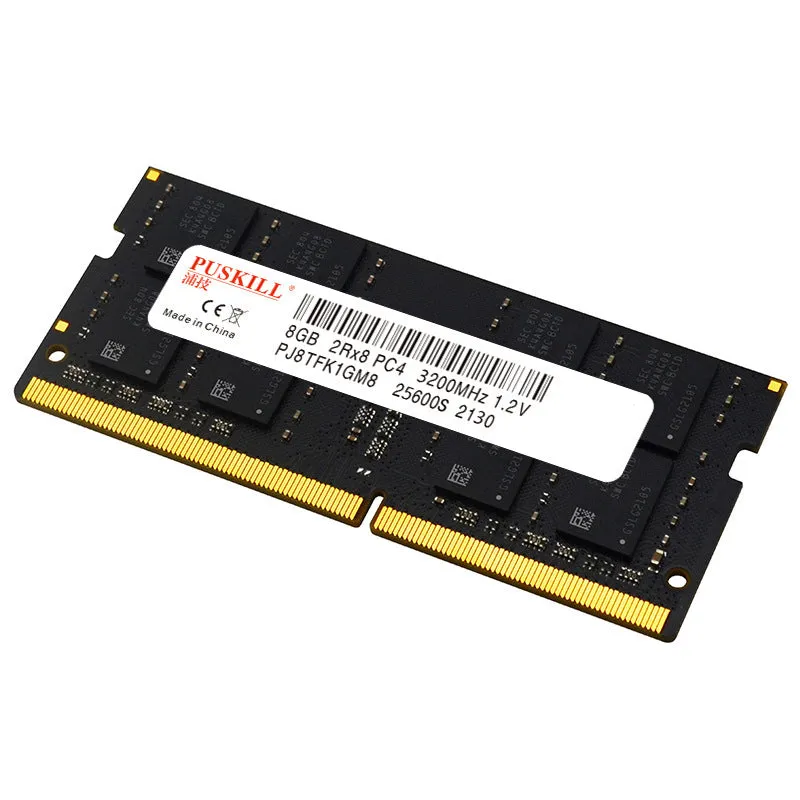
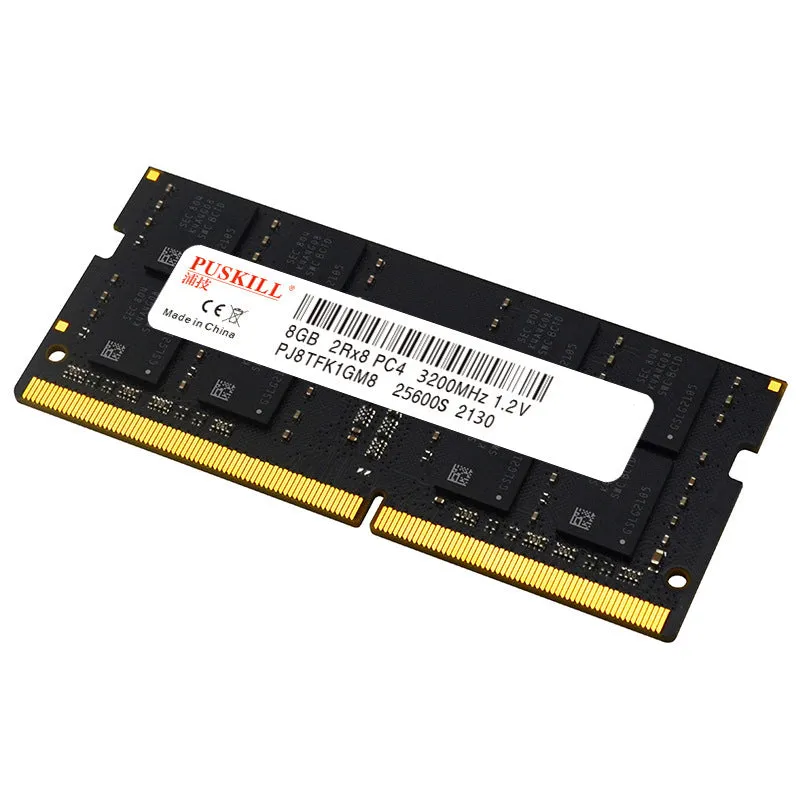
DDR4 notebook memory module, 260-pin SODIMM, available in capacities from 4GB to 32GB with speeds of 2400MHz, 2666MHz, or 3200MHz for upgrading laptop computer RAM performance, single bar form factor measuring 69mm x 30mm x 37mm.


DDR4 notebook memory module, 260-pin SODIMM, available in capacities from 4GB to 32GB with speeds of 2400MHz, 2666MHz, or 3200MHz for upgrading laptop computer RAM performance, single bar form factor measuring 69mm x 30mm x 37mm.
DDR4 Notebook Memory Module: 260-pin SODIMM for Laptop Upgrades in 4GB to 32GB Capacities
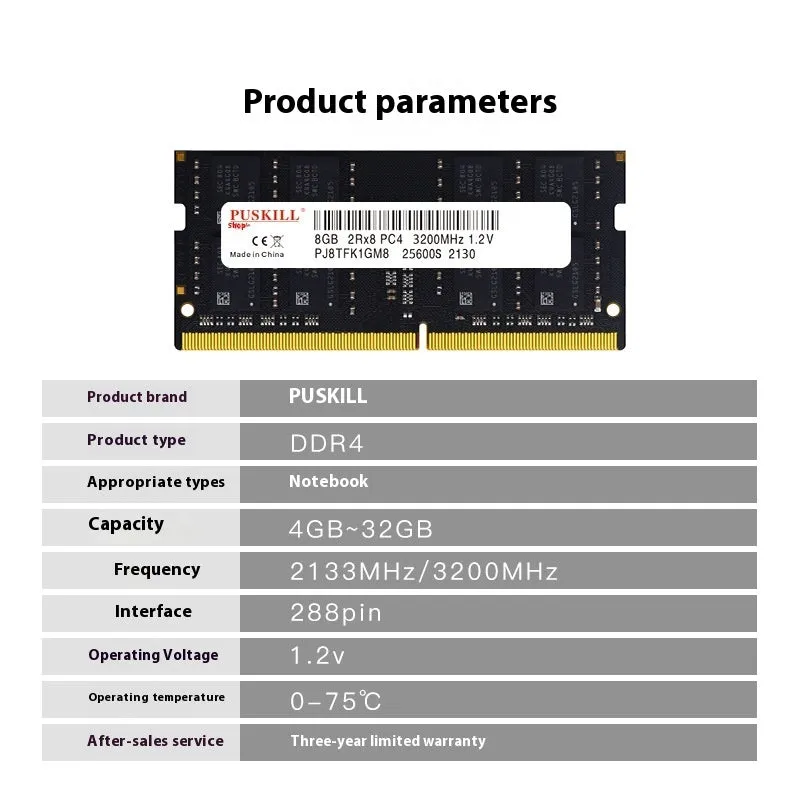
This product is a DDR4 memory module designed specifically for upgrading the RAM in notebook and laptop computers. It conforms to the Small Outline Dual Inline Memory Module (SODIMM) standard, which is the physical format used in most portable computers due to space constraints. The module is offered in a range of capacities from 4GB to 32GB, providing options for both modest performance boosts and significant multitasking enhancements. Furthermore, it is available with different operating frequencies, specifically 2400MHz, 2666MHz, and 3200MHz, allowing users to select a speed that matches their laptop's chipset and processor capabilities. The single-bar configuration makes it suitable for adding a new module to an empty slot or replacing an existing one, depending on your laptop's architecture and upgrade path.
Features and Construction
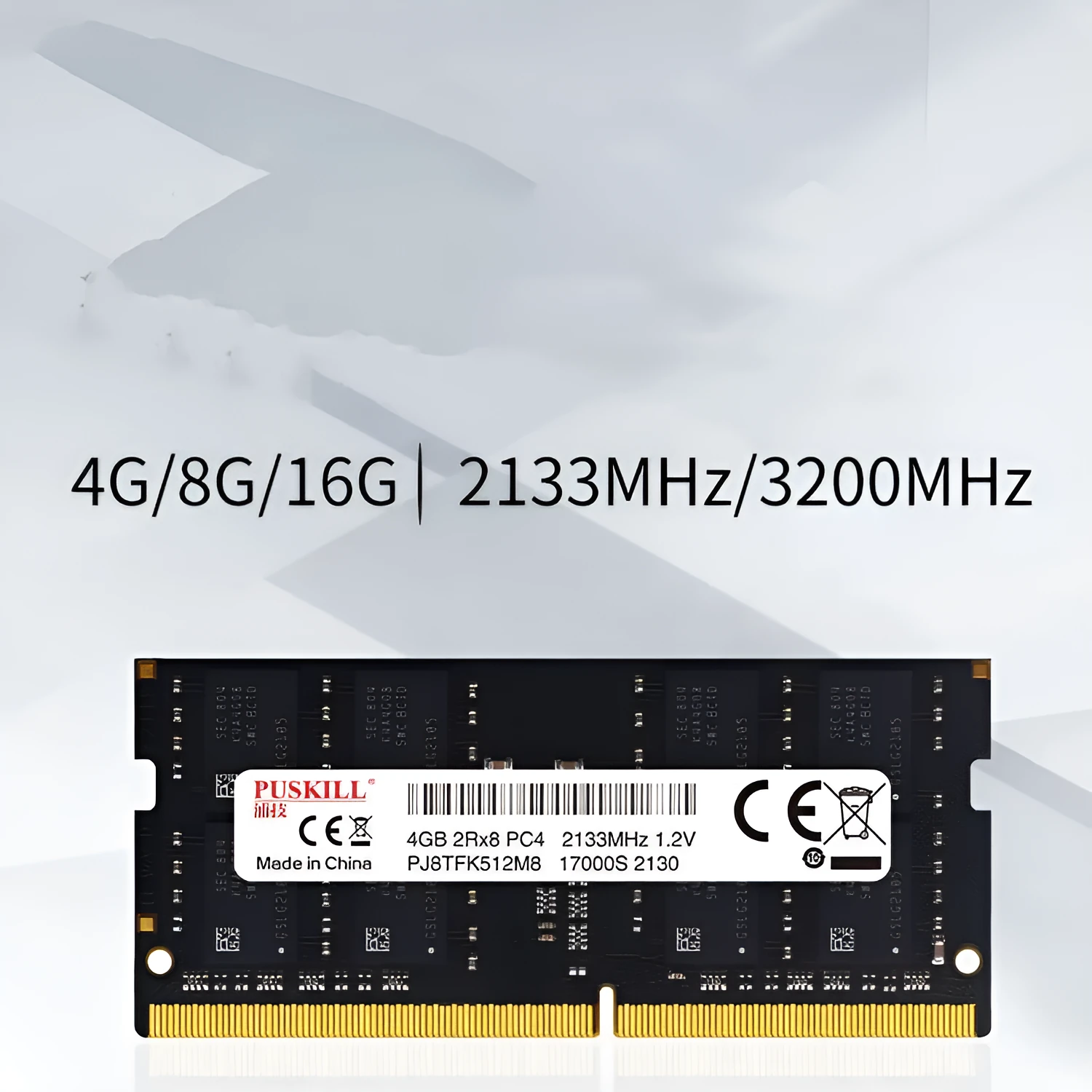
This memory upgrade centres on the concrete specifications that determine laptop compatibility and performance potential. The build follows industry standards for DDR4 SODIMM modules to ensure broad hardware support.
Material and Build
The module is constructed using standard memory component technology on a printed circuit board (PCB). It utilises a 260-pin edge connector interface, which is the defined physical and electrical standard for DDR4 SODIMMs. This pin count and layout are crucial for connecting correctly with the memory slot on a laptop's motherboard. The specific type of memory chips used (e.g., DRAM chips) is not detailed, but they operate at the specified DDR4 voltages and timings associated with the listed speeds. The build is focused on functional reliability within the thermal and spatial limits of a laptop chassis.
Size and Practical Fit
The physical dimensions of the module are precisely 69mm in length, 30mm in width, and 37mm in height. This compact SODIMM form factor is non-negotiable for fitting into the dedicated memory bays of notebook computers, which are significantly more space-restricted than desktop towers. The height of 37mm is a standard profile for laptop memory, designed to clear other internal components like keyboards, cooling systems, or the bottom case. Before purchase, it is essential to check your specific laptop model's manual or specifications to confirm it has an accessible SODIMM slot and that these dimensions are compatible, as some ultra-thin models may use even lower-profile modules.
Uses and Placement
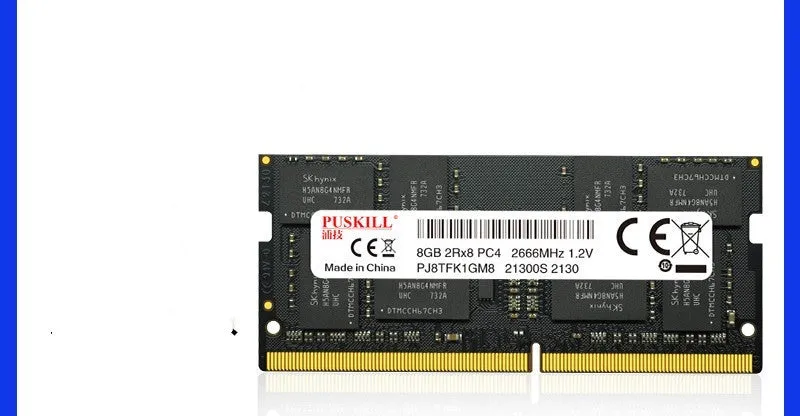
This memory serves a clear, practical purpose: increasing the available RAM in a compatible laptop. The correct application ensures smoother operation and extends the useful life of your computer.
Event or Professional Use
For users who run demanding professional or creative software on laptops, such as video editors, graphic designers, engineers using CAD, or data analysts, upgrading from a lower base memory can be critical. A 16GB or 32GB module can enable handling larger files, more complex simulations, or keeping numerous specialised applications and browser tabs open simultaneously without excessive slowdowns or reliance on slower virtual memory (hard drive swapping). Matching the module's speed (2666MHz or 3200MHz) to a high-performance laptop's capable processor can also help maximise data throughput for time-sensitive tasks.
Everyday Home Use
For general home and student laptops, an upgrade from a minimal 4GB to an 8GB or 16GB module can transform the everyday experience. It directly addresses common performance issues like system lag when multitasking between web browsers with multiple tabs, office applications, communication software, and media players. It can also improve the responsiveness of entry-level gaming or provide more headroom for operating system updates and security software that increasingly demand more memory. Choosing a 2400MHz or 2666MHz module is often sufficient and cost-effective for these mainstream usage scenarios.
Benefits and Buying Value
The primary value lies in the measurable increase in system RAM, which is one of the most effective upgrades for improving a laptop's perceived speed and ability to handle concurrent tasks.
Reuse and Low Maintenance
Once installed, a memory module requires no ongoing maintenance, drivers, or software configuration to function at its rated capacity and speed. It is a passive hardware component that works silently whenever the computer is powered on. If you eventually replace your laptop, a standard DDR4 SODIMM module like this one could potentially be transferred to a new compatible machine, provided the specifications align, representing a reusable investment in performance. Unlike batteries or drives, memory has no moving parts and is not subject to wear from regular read/write cycles in the same way, contributing to its longevity.
Why Choose This Product
This product offers a clear specification range—capacities from 4GB to 32GB and speeds from 2400MHz to 3200MHz—allowing you to select a precise match for your laptop's capabilities and your budget. The single-module format provides simplicity for a direct upgrade without needing to manage a kit of two matched sticks. The stated 260-pin SODIMM form factor and 69mm x 30mm x 37mm dimensions are the critical checks for physical compatibility. When sourcing an upgrade, having these exact specifications allows you to cross-reference with your laptop manufacturer's requirements confidently, reducing the risk of purchasing an incompatible part that won't fit or work in your machine.